



Between Ancient Roads and Modern Rails
Western Arabia has long been shaped by journeys. Pilgrims, merchants and travellers once crossed immense stretches of desert towards the cities of the Hijaz, following routes that connected settlements, markets and sacred sites. Today, modern transport has transformed the experience of moving through the region, but the landscape still carries traces of those older journeys.
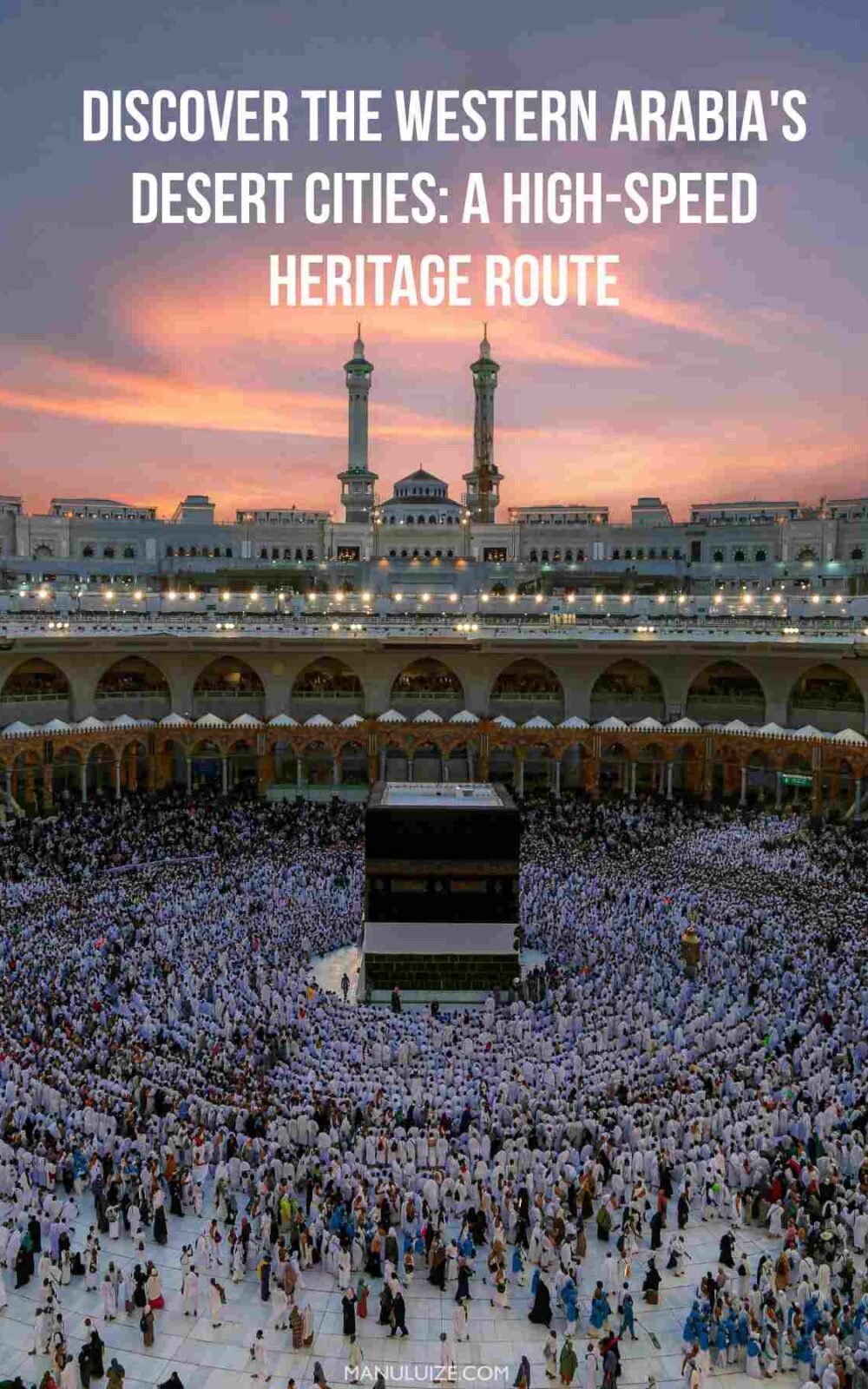
A route through Mecca, Medina and Jeddah reveals a fascinating mixture of religious heritage, historic neighbourhoods, contemporary architecture and desert scenery. High-speed rail adds a distinctly modern dimension, allowing travellers to cross the region quickly while still experiencing the contrasts between its major cities.
Mecca Beneath the Mountains
Mecca occupies a remarkable setting surrounded by rugged mountains. At the centre of the city stands the Masjid al-Haram, the holiest site in Islam and a place of immense significance for Muslim visitors from around the world.
The city has changed dramatically over recent decades, with major developments transforming its skyline and infrastructure. Yet the surrounding mountains provide a reminder of the geography that has shaped Mecca throughout its history.
For Muslim travellers, the pilgrimage experience naturally forms the heart of a visit. The rituals of Hajj and Umrah connect the modern city with traditions extending back many centuries, giving the urban environment a profound sense of continuity.
Riding Across the Hijaz
The Mecca to Medina train has changed the practical experience of travelling between two of Islam’s most important cities. The route forms part of the high-speed railway linking several major destinations in western Saudi Arabia.
Rather than following the pace of historic desert travel, passengers cross the region in modern carriages designed for rapid long-distance journeys. Beyond the stations, the landscape remains characteristically arid, with rocky terrain and wide expanses of desert appearing between urban areas.
The contrast is striking. A journey that once demanded considerably more time and planning can now be completed within a modern transport network, while the geographical relationship between the cities remains intact.
Medina’s Spiritual Centre
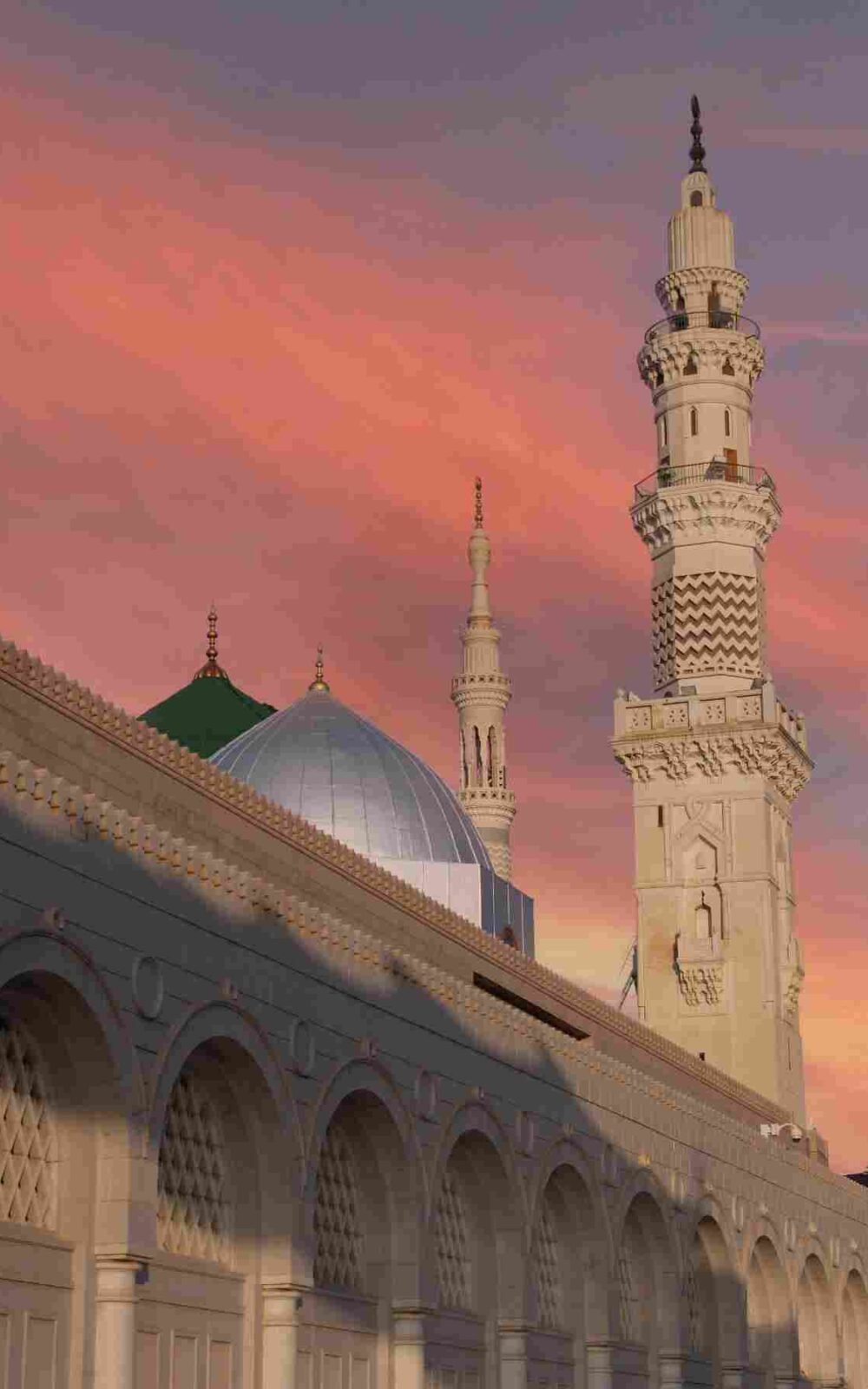
Medina has a gentler atmosphere than the immense urban scale of Mecca. The Prophet’s Mosque forms the city’s spiritual and architectural focal point, with its distinctive green dome and expansive courtyards attracting pilgrims throughout the year.
The city is also closely associated with the life of the Prophet Muhammad and the earliest Muslim community. Sites connected with this history give Medina significance far beyond its architecture, although many locations require travellers to observe specific access and religious considerations.
Away from the central religious district, modern neighbourhoods, shops and restaurants demonstrate how Medina has developed into a contemporary Saudi city while retaining its historic importance.
A Railway Built for the Present
The Haramain train represents one of the most significant changes in regional transport. Its high-speed network connects major cities across western Saudi Arabia, providing a fast alternative to road travel.
Stations themselves reflect this transformation. Large, contemporary structures stand in contrast to the traditional imagery often associated with the Hijaz, incorporating modern facilities designed for substantial passenger numbers.
The railway also changes how travellers perceive distance. Desert landscapes that once suggested remoteness now become part of a journey measured in hours rather than days, illustrating the speed of Saudi Arabia’s infrastructure development.
Jeddah Where the Desert Meets the Red Sea
Jeddah offers a completely different urban experience. Positioned on the Red Sea, the city has historically served as an important port and gateway for pilgrims arriving by sea.
Its historic Al-Balad district preserves traditional houses with distinctive wooden window screens known as rawasheen. Narrow streets pass between old merchant residences, mosques and commercial buildings, revealing a style of architecture adapted to the region’s climate.
The district has undergone conservation efforts in recent years, helping preserve its distinctive character while surrounding areas continue to modernise.
A Waterfront Shaped by Trade
Jeddah’s Corniche stretches along the Red Sea, offering a broad contrast to the enclosed streets of Al-Balad. Sculptures, landscaped spaces and promenades create a popular setting for evening walks, particularly when temperatures become more comfortable.
The sea has always been central to Jeddah’s identity. Its port supported trade across the Red Sea and Indian Ocean, bringing goods, people and ideas into western Arabia.
That history remains visible in the city’s cosmopolitan character. Restaurants and shops reflect influences from across the wider region, while the waterfront provides an open horizon beyond the dense urban centre.
Architecture in a Harsh Climate
Traditional architecture across western Arabia developed in response to heat, sunlight and the need for privacy. Buildings in historic districts often feature shaded passages, internal courtyards and carefully designed windows that allow air and filtered light into domestic spaces.
Jeddah’s Al-Balad is particularly valuable for understanding these techniques. Multi-storey houses were constructed from locally available materials, with elaborate wooden screens adding both decoration and practical protection from the intense sun.
Modern Saudi architecture takes a very different approach, relying on advanced engineering, glass, steel and large-scale cooling systems. Seeing both styles within the same journey highlights how dramatically the built environment has evolved.
Flavours of the Hijaz
Food provides another route into the region’s history. Hijazi cuisine reflects centuries of movement through the Red Sea, with influences from the Arabian Peninsula, Africa and South Asia appearing alongside local traditions.
Rice dishes, grilled meats, breads and spiced stews are common, while seafood becomes particularly prominent in Jeddah. Markets and traditional restaurants provide opportunities to encounter dishes that may be less familiar to visitors accustomed to the cuisine of central Saudi Arabia.
Dates, Arabic coffee and sweets also occupy an important place in hospitality. Sharing food remains one of the simplest ways to experience the warmth of local social customs.
Beyond the Urban Corridor
The cities may form the main structure of the journey, but western Saudi Arabia’s wider landscape deserves attention. The Hijaz Mountains create rugged backdrops around parts of the region, while the Red Sea coast introduces coral reefs, islands and clear tropical waters.
For visitors interested in marine environments, the Red Sea offers exceptional opportunities for diving and snorkelling. Its underwater ecosystems provide a dramatic contrast with the dry landscapes encountered inland.
Further away from the major cities, desert scenery becomes increasingly expansive. Rocky outcrops, volcanic formations and open plains reveal a side of Saudi Arabia that can feel far removed from its rapidly developing urban centres.
Heritage in a Changing Region
Western Arabia presents an unusual meeting of ancient significance and modern ambition. Mecca and Medina remain at the centre of Islamic spiritual life, Jeddah carries the legacy of a historic trading port, and the railway connecting them demonstrates the country’s determination to create a highly connected modern infrastructure.
The result is a journey where enormous changes can occur within relatively short distances. Sacred architecture gives way to contemporary stations, historic merchant houses stand near modern towers, and the desert continues beyond cities that are expanding at remarkable speed.
For travellers exploring the region with an appreciation for history, geography and architecture, the most compelling moments often come from observing those contrasts. Western Arabia is not simply looking back towards its past. It is building a very different future while carrying centuries of heritage into it.