



A Country Moving at Full Speed
South Korea can feel astonishingly compressed. In a single day, it is possible to leave the glass towers and crowded avenues of Seoul, pass through dense urban districts and arrive beside a southern coastline framed by mountains and sea. The country’s efficient transport network makes these contrasts surprisingly accessible.
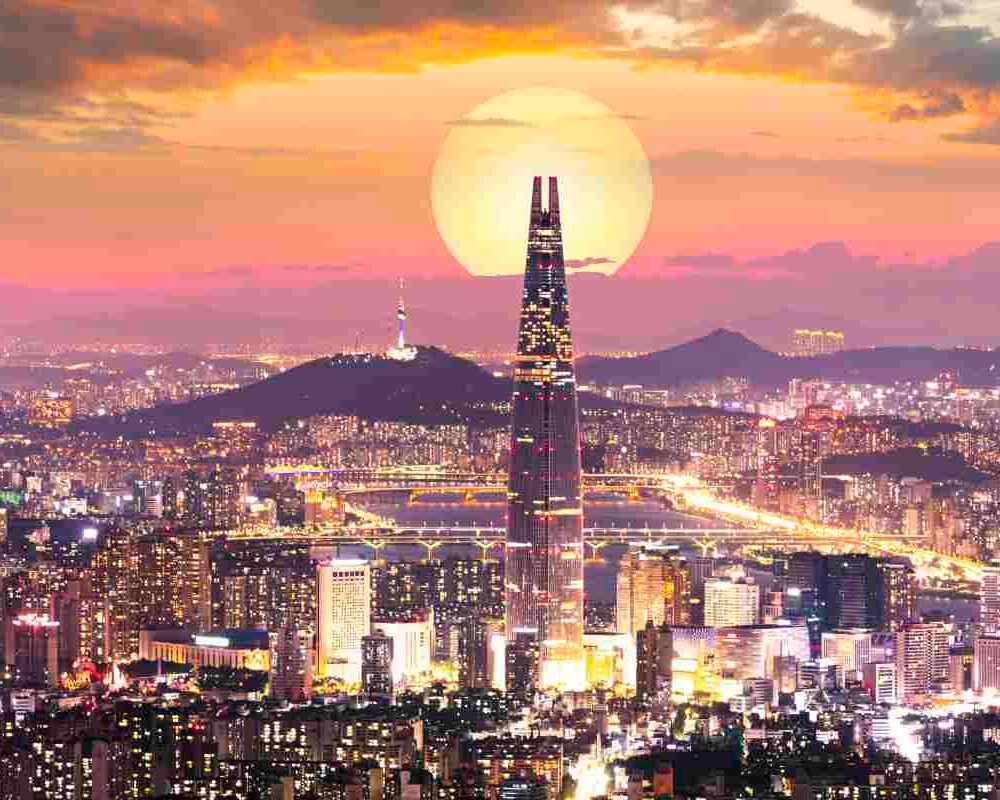
Yet speed is only one part of the experience. South Korea’s cities have developed their own distinct personalities, shaped by food, design, entertainment, history and geography. Seoul provides the intensity of a global capital, while the southern coast introduces a more relaxed rhythm, with seafood markets, harbour views and historic neighbourhoods creating a very different atmosphere.
Seoul After the Morning Rush
Seoul wakes early. Subway platforms fill with commuters, cafés open their doors and delivery scooters begin weaving through the streets before many of the city’s attractions have opened.
The capital’s scale becomes clear from elevated viewpoints such as N Seoul Tower, but its personality is easier to understand at street level. In Ikseon-dong, traditional hanok buildings now accommodate restaurants, boutiques and cafés, while Seongsu has become known for converted industrial spaces and independent brands.
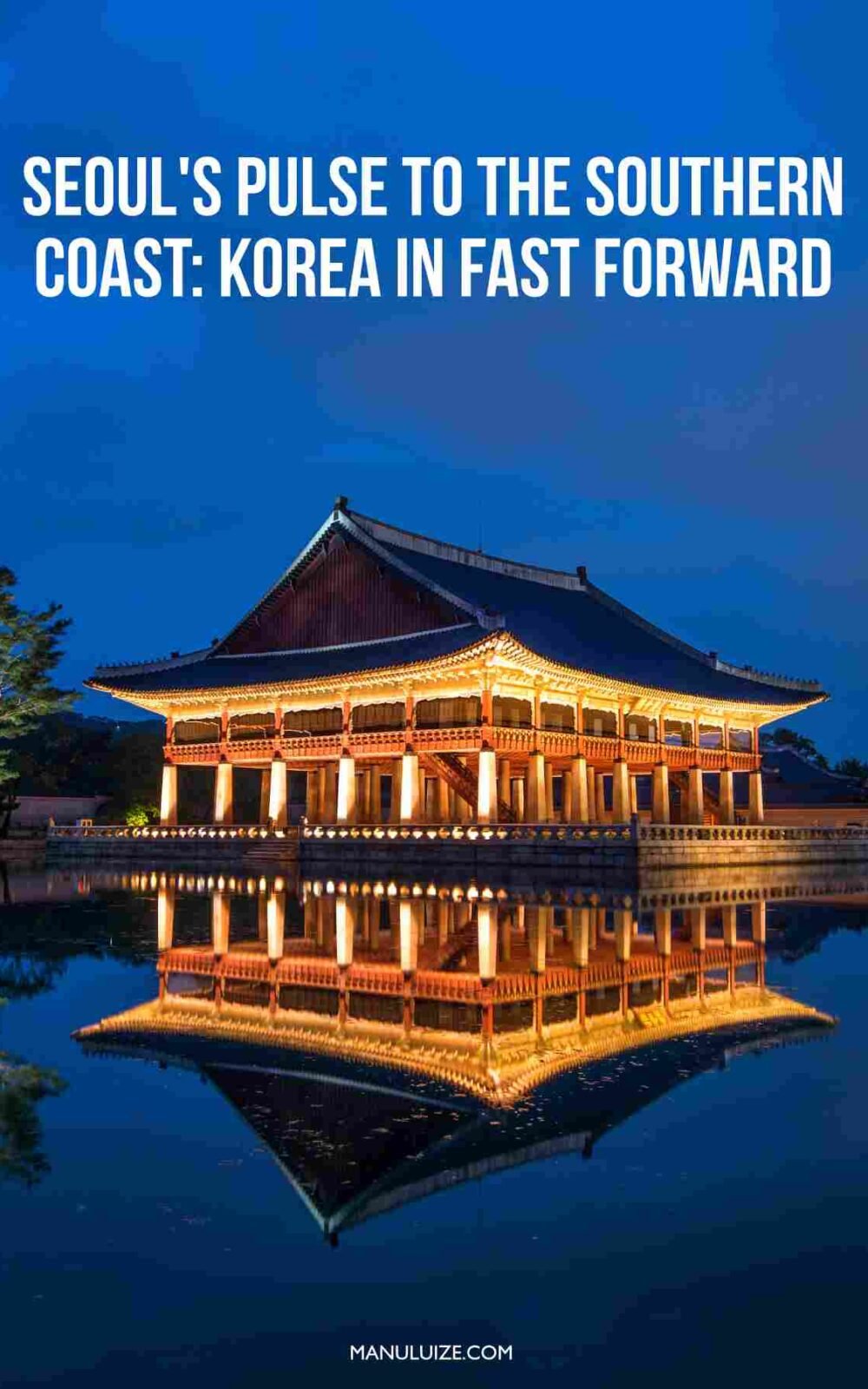
The contrast between old and new is particularly striking around Gyeongbokgung Palace. Visitors in traditional hanbok pass beneath the palace gates while modern office towers rise in the distance. Few places demonstrate Seoul’s ability to accommodate different eras quite so naturally.
Racing South by Rail
For travellers heading towards Korea’s southern cities, the KTX has transformed the idea of distance. High-speed rail connects Seoul with major destinations in the south, allowing an itinerary to cover considerable ground without sacrificing much time to transport.
The journey itself provides a changing view of the country. High-rise developments gradually give way to lower buildings, agricultural areas and distant hills. Stations along the route also demonstrate how closely modern infrastructure has been incorporated into Korean cities.
For a first-time visitor, the railway is more than a practical solution. It provides a window onto the country’s remarkable urban density and the way development extends far beyond the capital.
Busan at the Edge of the Peninsula
Busan feels immediately different from Seoul. Mountains press closer to the city, the sea appears around corners and the harbour gives many neighbourhoods a distinctly maritime identity.
Haeundae is the best-known beach district, with a broad sweep of sand backed by hotels, restaurants and cafés. Gwangalli has a different character, particularly after dark, when Gwangan Bridge becomes illuminated across the water.
The city’s hills also create some unusual neighbourhoods. Gamcheon Culture Village climbs steep slopes in a maze of brightly painted homes, stairways and small galleries. The area is visually distinctive, but its hillside setting also reflects the geographical constraints that have shaped Busan’s development.
A Closer Look at the Korean rail network
The KTX train is particularly useful for travellers who want to combine Seoul and Busan without making the journey feel like a full day devoted to transportation. Services run through the country’s major urban corridor, creating an easy link between the capital and the southern coast.
That accessibility changes the possibilities of an itinerary. A traveller can spend the morning among Seoul’s palaces and contemporary districts, then arrive in Busan with enough time left for an evening beside the sea.
The contrast is considerable. Seoul’s energy is metropolitan and inward-looking, while Busan constantly reminds visitors of its position between mountains and open water.
Markets Where the Sea Sets the Menu
Busan’s culinary identity is closely tied to its location. Jagalchi Market is the city’s most famous seafood destination, occupying a waterfront area where vendors display fish, shellfish and other catches from nearby waters.
The market can be lively and overwhelming, particularly during busy periods, but it provides an unusually direct connection between the city and the sea. Restaurants nearby specialise in seafood prepared in a variety of ways, from raw preparations to grilled and simmered dishes.
Elsewhere, milmyeon, a cold noodle dish associated with Busan, offers a completely different taste. The city’s food culture is not simply about what is caught offshore. It also reflects migration, post-war history and local adaptation.
Temples Above the Water
One of Busan’s most remarkable cultural sites sits outside the dense centre. Haedong Yonggungsa occupies a dramatic coastal position, with temple buildings and stone statues overlooking the sea.
Unlike many Korean temples situated deep within mountain landscapes, this setting places the architecture directly beside the shoreline. Waves crash against rocks below the stairways, creating a constantly changing backdrop.
The site is especially atmospheric in the early morning, when the light reaches across the water and the temple complex is quieter. It also demonstrates how Korean Buddhist architecture can interact closely with the natural environment.
Gyeongju’s Ancient Landscape
A journey east from Busan leads towards Gyeongju, former capital of the Silla Kingdom and one of the most important historical destinations in South Korea.
The city feels far less urban than Seoul or Busan. Grassy burial mounds rise unexpectedly beside roads, while ancient temples, stone pagodas and archaeological remains are scattered across the surrounding countryside.
The Bulguksa temple complex and nearby Seokguram Grotto are particularly significant. Together they reveal the sophistication of Silla-era art and architecture, while the numerous tombs around central Gyeongju give the city an unusual visual identity.
Cycling between sites is one of the most enjoyable ways to experience the area, especially when the weather is mild.
Nightlife With a Korean Accent
Returning to Busan brings another change of pace. The city remains lively after sunset, but its nightlife has a distinctly coastal quality.
Bars and restaurants around Seomyeon attract a younger crowd, while Gwangalli provides a more scenic evening setting. Sitting near the waterfront with Gwangan Bridge illuminated across the bay creates a completely different experience from Seoul’s dense nightlife districts.
Korean drinking culture also revolves around food. Meals are often shared, with numerous small dishes arriving alongside the main order, encouraging conversation and long evenings around the table.
Design, Technology and Everyday Life
South Korea’s reputation for technological innovation is visible throughout its cities, but the country’s modernity is not limited to smartphones and high-speed connections.
Seoul’s design districts contain experimental galleries, fashion labels and architecture that reflects the country’s rapidly changing cultural influence. Busan has developed its own creative identity through film, visual arts and regeneration projects.
At the same time, older traditions remain woven into ordinary routines. Traditional markets operate beneath modern apartment towers, neighbourhood restaurants continue family recipes and historic ceremonies coexist with contemporary entertainment.
That coexistence is perhaps more revealing than any single landmark.
Following Korea Beyond the Capital
A journey from Seoul towards the southern coast shows how much geographical variety exists within South Korea. The capital delivers density, fashion, technology and an almost relentless sense of movement. Busan introduces beaches, mountains, seafood and a stronger connection with maritime life, while Gyeongju provides a window into a much older Korea.
The distances are manageable, but the cultural shifts feel substantial. That is what makes travelling through the country by rail so rewarding. Instead of experiencing South Korea as a single metropolitan story, the journey exposes its different rhythms, from the first rush of Seoul’s morning commuters to the quiet sound of waves against Busan’s shoreline.