


Most people shopping for extensions compare price first and method second, then wonder a few months later why their schedule feels harder to keep than expected. Tape-in and hand-tied extensions solve the same basic problem, adding length and density without a permanent commitment, but they do it with different hardware, different upkeep rhythms, and different tolerances for how you sleep, wash, and style. Picking between them without understanding that difference is how clients end up switching methods after one round.
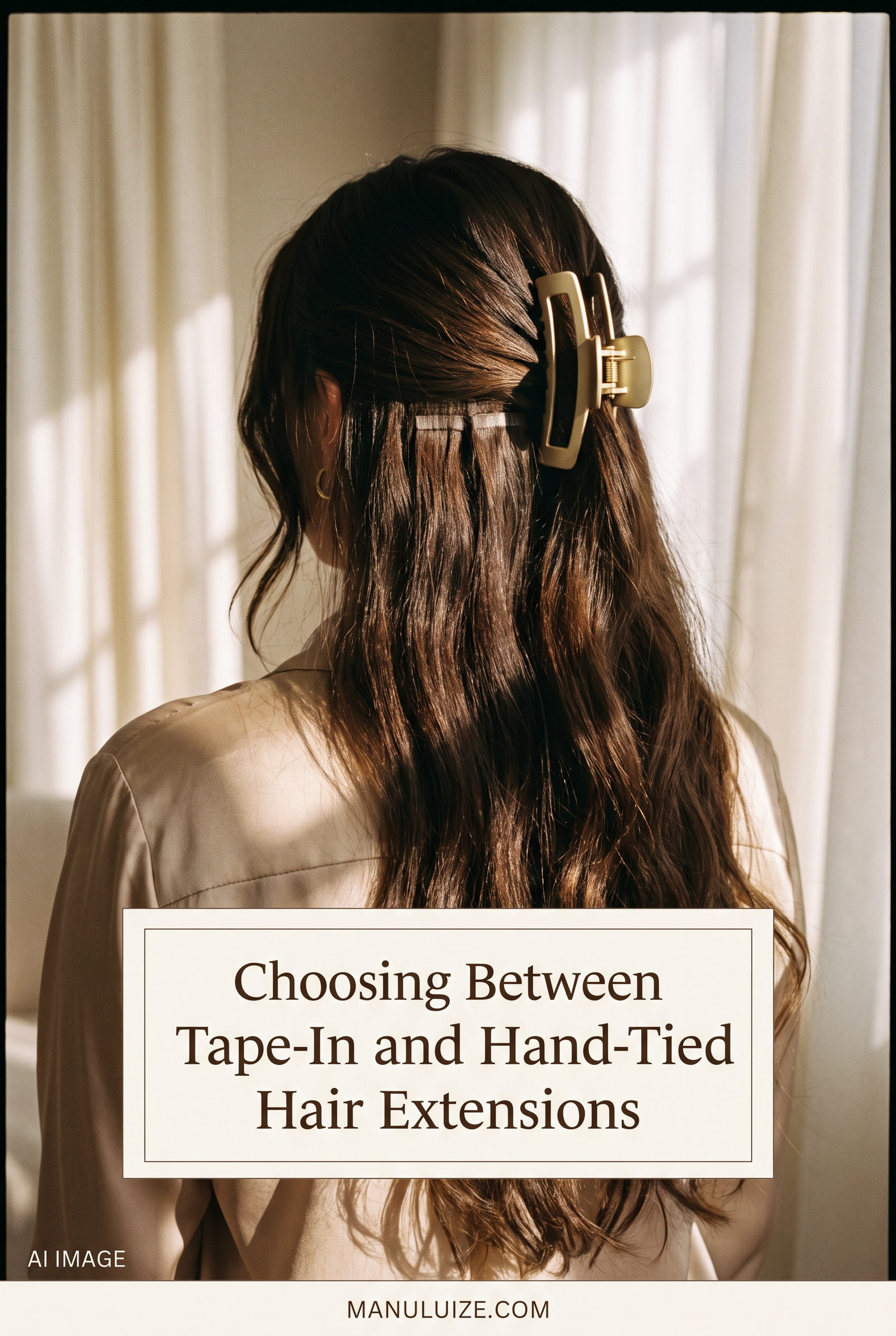
Both methods attach real strands of hair to your natural hair rather than gluing or bonding directly to individual strands, which is part of why they have become the two most requested salon extension methods over fusion and clip-ins. The difference that matters most day to day is how each one is built: tape-in wefts are thin, pre-taped sections sandwiched around small sections of natural hair, while hand-tied wefts are sewn onto a fine weft strip and attached to hair rows using a specialized tool rather than adhesive.
Salon Onyx, a hair salon in Scottsdale, Arizona that books extension appointments Monday through Friday plus Saturday hours, offers tape-in, hand-tied, beaded weft and halo extension methods, and schedules tape-in clients back in the chair every 6 to 8 weeks for a fresh application as natural hair grows out from under the tape. That interval is not a marketing number. It reflects how far a tape section can slide down the hair shaft before it becomes visible and needs to be reset closer to the scalp.
What Is the Actual Difference Between Tape-In and Hand-Tied Extensions?
The difference is the attachment method and, as a result, how much weight sits on any one section of hair. Tape-in extensions use medical-grade adhesive tape to sandwich a small section of natural hair between two thin wefts, which lies flat and applies quickly but needs to be reapplied as hair grows. Hand-tied extensions use a beaded row and thread to attach a wider weft without any adhesive or heat, distributing weight across more hair and allowing a stylist to move the row up rather than fully redo it at each appointment.
- Attachment: Adhesive tape wefts sandwiched around hair sections; Sewn weft attached with thread at a beaded row, no adhesive
- Typical wear before a move-up:About 6 to 8 weeks; About 8 to 10 weeks
- Maintenance visit: Full reapplication as tape lifts with hair growth; Row moved up the hair shaft, weft often reused
- Best suited for: Finer hair, first-time extension wearers; Thicker or coarser hair, longer-term extension wearers
How Often Do Tape-In and Hand-Tied Extensions Actually Need a Salon Visit?
Tape-in extensions need a maintenance visit sooner than hand-tied because the adhesive bond loses its hold as hair grows, while a hand-tied row can often go longer between visits since the beaded attachment simply slides down with growth rather than losing grip. At Salon Onyx, hand-tied clients typically return every 8 to 10 weeks with proper care, compared with the 6 to 8 week window for tape-ins. The American Academy of Dermatology recommends that any weave or extension style, regardless of method, be worn for two to three months at most before taking a break, specifically to give the scalp and hairline recovery time from the sustained tension of the attachment.
Does One Method Take Longer to Apply at the Salon?
Yes, hand-tied extensions generally take longer in the chair than tape-ins. Tape-in application is one of the fastest full-head extension methods available, often completed in roughly an hour to an hour and a half. Hand-tied application takes considerably longer for a first install, commonly three to five hours depending on how many rows and how much hair is added, though a later move-up appointment for an existing set runs closer to two hours since the stylist is repositioning rows rather than building a full head from scratch.
“The method someone should choose really comes down to how their hair grows and how often they’re realistically going to make it back in for maintenance,” said Ashley Blue, Blonde Specialist at Salon Onyx and a stylist licensed in both hand-tied weft and tape-in extensions. “Finer hair tends to do better with tape because there’s less weight pulling on any one section, while thicker or coarser hair can usually carry a hand-tied row longer between visits.” For a full breakdown of what each method involves and how appointments are structured, Salon Onyx’s page on hair extensions in Scottsdale covers the options offered at the studio.
Before booking either method, it helps to walk into a consultation with a short list of questions rather than just a photo of the look you want:
- How much natural hair thickness and density do you have to work with, and does that favor tape or hand-tied
- How many hours realistically fit your schedule for the first install versus a later move-up
- What is the actual reapplication or move-up interval for your hair type specifically, not just the general range
- Does your scalp tolerate sustained tension well, or do you need a lighter-weight method
- How will the extensions be removed, since improper removal is where most extension-related breakage happens
The global market for hair extensions is projected to grow from roughly $4.13 billion in 2025 to about $4.41 billion in 2026, according to The Business Research Company, a pace that tracks with how mainstream both tape-in and hand-tied methods have become outside of editorial and bridal styling. That growth has also meant more stylists getting certified in hand-tied methods specifically, since the technique requires training beyond general color and cutting work.
Neither method is objectively better across the board. Tape-in extensions suit clients who want a faster, lower-cost entry point and don’t mind a shorter maintenance window, while hand-tied extensions suit clients willing to pay more upfront for a longer stretch between salon visits and a method that distributes weight more evenly across the head. The right starting point is a consultation where a stylist can actually look at hair density and growth pattern before recommending one method over the other, rather than picking based on price alone.