



Summer is knocking, and your living room still looks like it’s waiting for a snowstorm. Sound familiar? Don’t worry, you’re not alone. Most of us forget that our spaces need a seasonal refresh just as much as our wardrobes do. And honestly, summer living room decor doesn’t have to be a big project or a big expense. A few smart swaps, some lighter fabrics, and a splash of color can completely transform the way your space looks and feels. I’ve been obsessing over home styling for years, and every summer I go through this exact ritual. This guide covers everything you need to know, from color palettes to biophilic touches, so you can walk into your living room and actually feel like you’re on vacation.
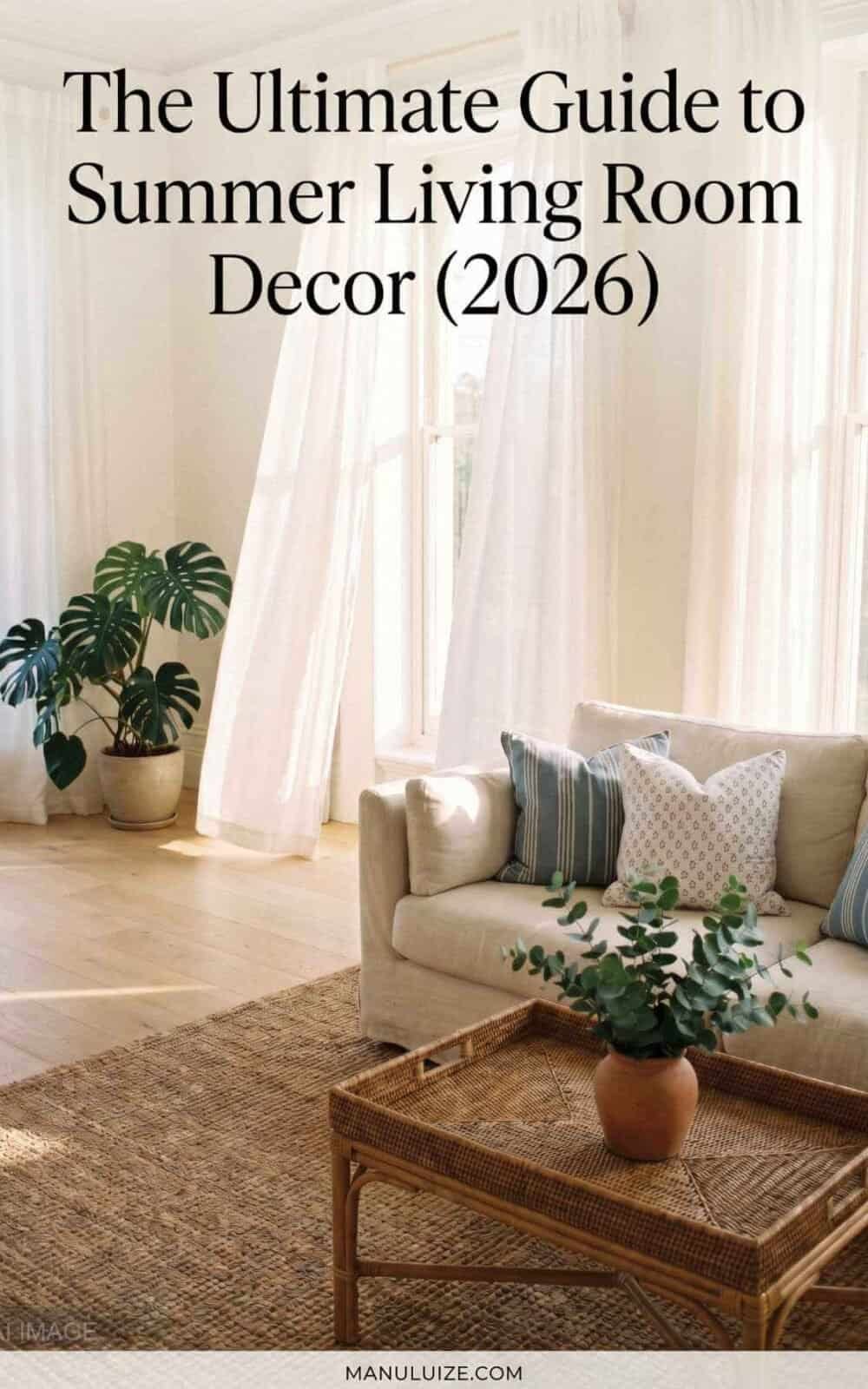
Why Update Your Living Room for Summer?
Here’s the thing people don’t talk about enough: your home affects your mood more than almost anything else. The heavy wool throws, the dark cushions, the layered rugs that felt so cozy in February? They work against you in July. They make a room feel stuffy, heavy, and visually warm in a way that doesn’t feel refreshing at all.
Updating your living room for summer isn’t about redecorating from scratch. It’s about editing what’s already there and making a few intentional swaps that shift the energy of the room. Think of it like dressing for the season. You wouldn’t wear a puffer coat in August, so why would your sofa?
There’s also a practical side to this. Lighter fabrics genuinely help a room feel cooler. Decluttering surfaces improves airflow visually, which actually tricks the brain into registering the space as more comfortable. And bringing in natural materials connects you to the outdoors in a way that science now backs up pretty firmly. It’s called biophilic design, and we’ll get to that.
The good news? Most of what I’m about to share costs very little. A lot of it costs nothing at all.
Summer Color Palettes That Work in Any Home
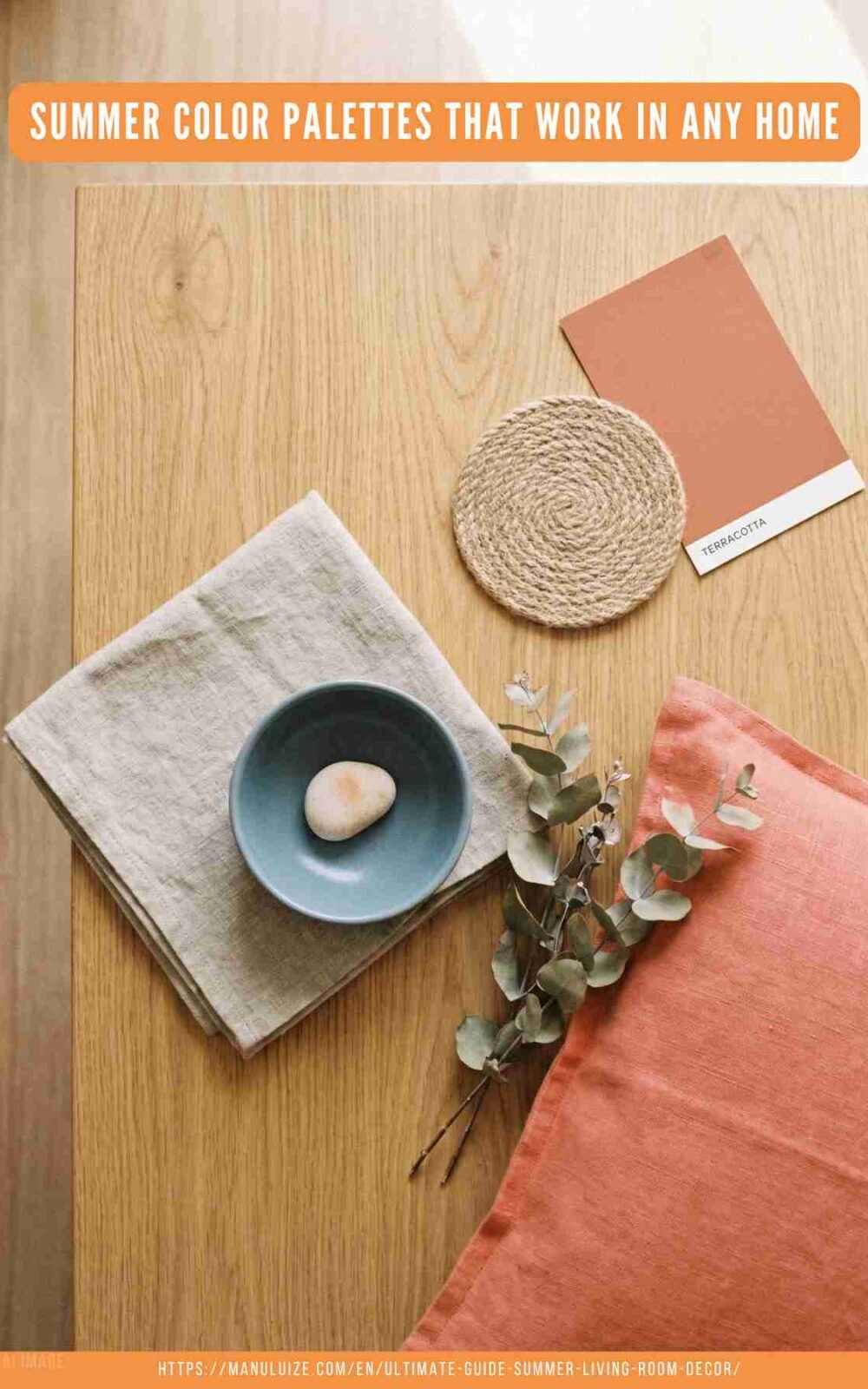
Color is your most powerful tool when it comes to summer living room decor, and you don’t need to repaint a single wall to use it effectively. The palette shift happens through textiles, accessories, and small accent pieces. It’s subtle, but the cumulative effect is huge.
Cool Blues and Aquas
Soft blues, aquas, and turquoises are the workhorses of summer color palettes. They read as visually cool, they pair with almost everything, and they instantly evoke that breezy, open feeling you want in a summer space. Think dusty blue throw pillows, a seafoam vase on the coffee table, or a woven blue-and-white rug.
IMO, the biggest mistake people make with blue is going too bright or too saturated. The deep navy that looks amazing in winter feels heavy in summer. Opt instead for softer, muted versions like pale aqua, coastal blue, or even a greyed-out slate. These tones reflect light rather than absorbing it.
Crisp Whites and Warm Neutrals
White is your best friend in summer, and not just because it looks clean. White reflects heat and light, which makes a room feel both cooler and more spacious. Swap out dark cushion covers for ivory, cream, or bright white ones. Add a white ceramic lamp, a light-colored throw, or a pale rug. The shift will surprise you.
Warm neutrals like sandy beige, warm taupe, and soft wheat work beautifully alongside white. They bring the outside in without making the space feel dark. Together, white and warm neutrals create that effortless “summer house” look that feels relaxed but intentional.
Pops of Coral, Terracotta, and Gold
Here’s where you get to have fun. Strategic pops of warm color keep a cool palette from feeling cold. A coral cushion, a terracotta candle holder, a gold-framed mirror. These accents anchor the room and add personality without overwhelming it.
The key word is “pop.” One or two accent pieces in a warm hue go a long way. Three or more and you start fighting your own palette. Trust me on this one.
What to Retire for Summer
Just as important as what you bring in is what you put away:
- Dark velvet cushions — they absorb heat visually and literally
- Heavy knit throws — save them for October
- Deeply saturated deep greens, burgundies, or navy throws — too wintry
- Heavily patterned, dark-toned rugs — swap for lighter natural fiber options
Choosing Lightweight Fabrics & Textiles
Fabrics do heavy lifting in any seasonal refresh, and summer is all about going lighter, breezier, and more breathable. The right textile choice makes a room feel noticeably cooler, even if the temperature doesn’t change at all.
Linen: The MVP of Summer Textiles
If there’s one fabric that defines summer interior design, it’s linen. Linen is breathable, gets softer with every wash, wrinkles beautifully (in a laid-back, intentional way), and comes in the most perfect range of natural tones. It’s the definition of effortless.
Use linen for:
- Curtains and drapes — sheer linen panels let light filter through softly while maintaining privacy
- Cushion covers — swap your velvet and faux fur covers for linen ones in white, oat, or dusty blue
- Throw blankets — a lightweight linen throw draped over the arm of your sofa looks elegant without adding visual weight
Cotton: The Everyday Hero
Cotton is linen’s more affordable, easier-to-care-for sibling. Lightweight cotton cushion covers, slipcovers, and throws are perfect for high-use rooms where things get washed frequently. If you have kids, pets, or both (you brave soul), cotton slipcovers are your best summer upgrade. Washable, durable, and they dry fast.
What to Avoid
Some fabrics actively work against you in summer:
- Velvet — looks gorgeous but feels warm and heavy
- Faux fur — absolutely not, it’s July
- Thick polyester — traps heat and doesn’t breathe
- Heavy wool blends — great for winter throws, not for summer
Window Treatments That Work
Your window treatments affect the entire mood of the room. Swap heavy drapes for sheer linen or cotton panels that filter light rather than block it. If you want to control heat coming through south- or west-facing windows, consider bamboo or rattan roller blinds. They block harsh direct sunlight while keeping the look natural and breezy. No, blackout curtains in August are not the vibe we’re going for here :/
Natural Materials: Rattan, Jute, Linen
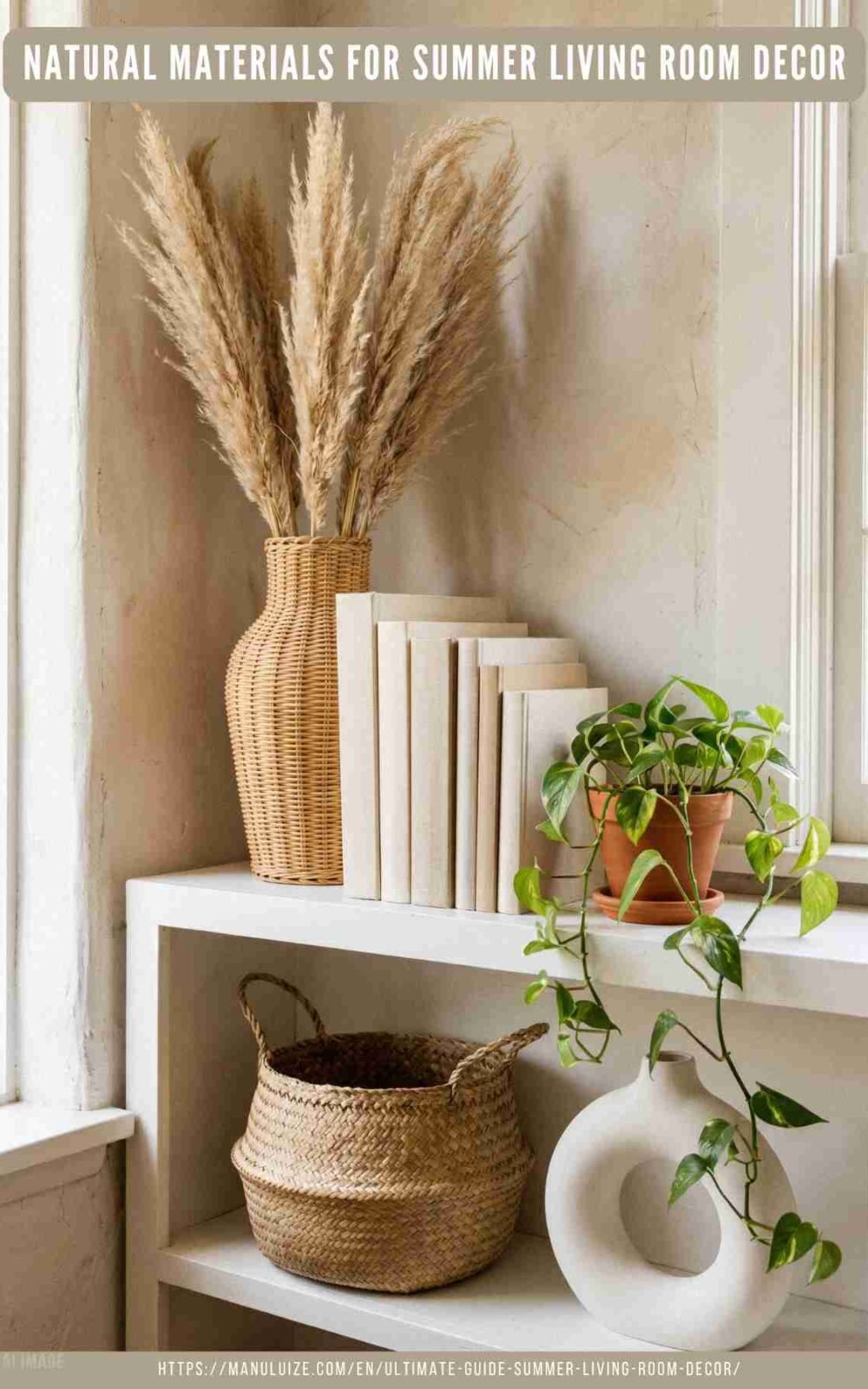
Natural materials are having a serious moment in 2026, and for good reason. They bring texture, warmth, and an organic quality that makes a room feel connected to the outdoors. They also photograph beautifully, which is a bonus if you enjoy sharing your space online.
Rattan and Wicker
Rattan furniture and accessories are perhaps the most iconic summer interior material. A rattan coffee table, a wicker side chair, a woven pendant light. These pieces have been popular for decades because they genuinely work. They’re lightweight, visually airy, and instantly casual.
You don’t need to go full rattan-everything. In fact, please don’t. One or two statement rattan pieces alongside your existing furniture is all you need. A rattan tray on the coffee table, a wicker basket for blanket storage, or a cane accent chair in the corner. Subtle, effective, beautiful.
Jute and Sisal Rugs
Replacing a thick, heavy rug with a natural fiber one is one of the most impactful summer swaps you can make. Jute and sisal rugs bring an earthy, textural quality to a room and they feel lighter underfoot, both literally and visually.
Jute is softer and more comfortable for bare feet. Sisal is more durable and better for high-traffic areas. Either way, the natural tones of beige, tan, and warm brown work beautifully with almost any summer palette.
A few tips:
- Use a rug pad under natural fiber rugs — they can be slippery on hard floors
- Avoid placing them in high-moisture areas — natural fibers and humidity don’t mix well
- Layer them over existing rugs for added texture without full replacement
Bamboo and Woven Accents
Beyond rugs and furniture, look for bamboo in lighting, trays, and decorative accessories. A bamboo pendant light over a reading corner, a woven seagrass basket as a plant pot holder, a rattan magazine rack. These small touches add up to a cohesive, natural-feeling space without requiring a complete room overhaul.
Wood Tones for Summer
Not all wood works for summer. Light, pale wood tones — white oak, birch, ash — feel airy and fresh. Dark mahogany and walnut, while stunning in other seasons, can feel too heavy for a summer aesthetic. If your existing furniture is dark wood, balance it with light accessories, pale textiles, and plenty of white or cream tones.
Biophilic Touches: Plants & Greenery
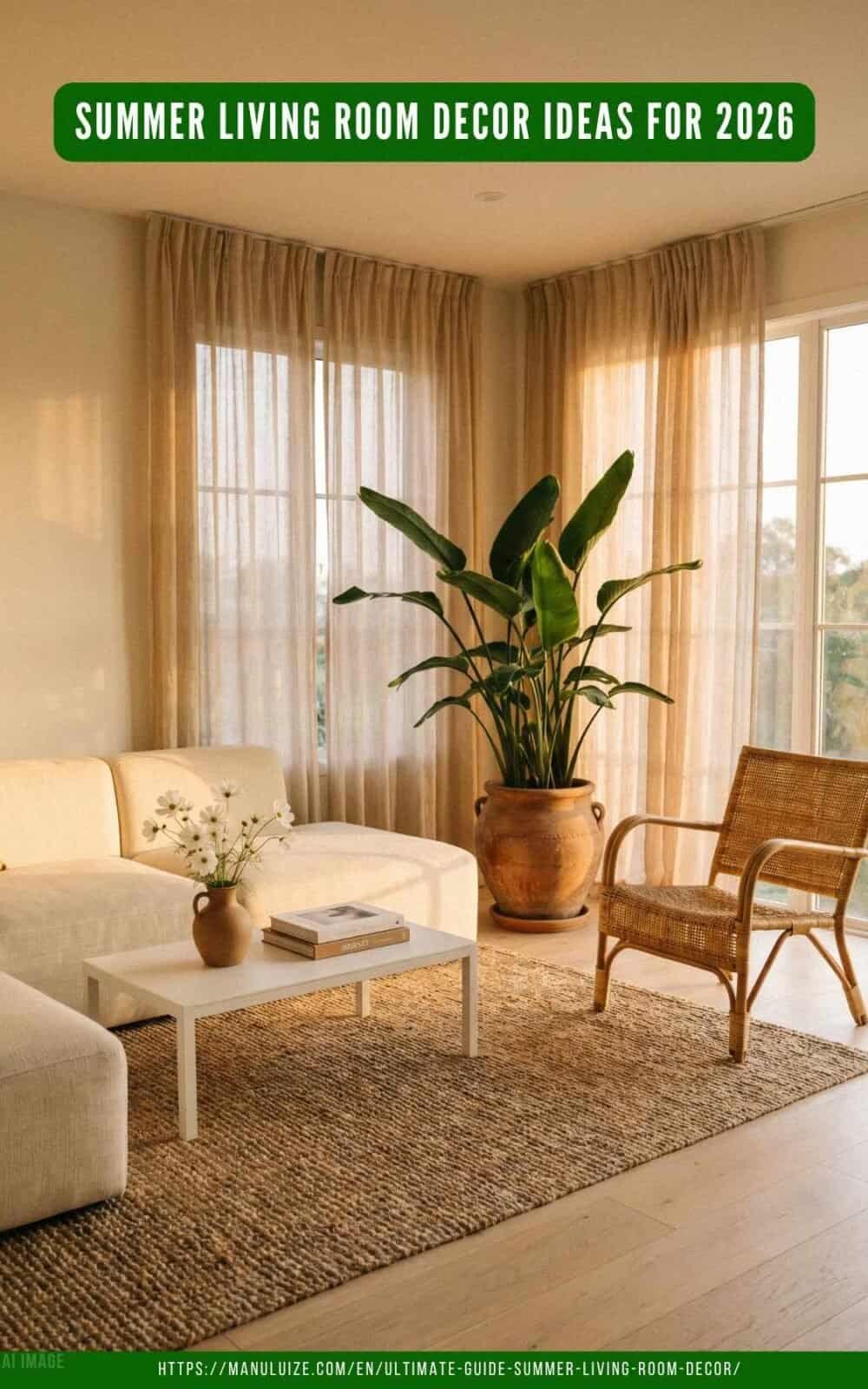
Biophilic design, which is the practice of incorporating natural elements into interior spaces, isn’t just a trend anymore. Research consistently shows that exposure to natural elements reduces stress, improves focus, and genuinely makes people feel better. In summer, when we’re naturally more connected to the outdoors, bringing that energy inside makes complete sense.
Statement Plants That Deliver
If you’re going to invest in one plant for your living room, make it a statement one:
- Fiddle leaf fig — dramatic, architectural, and a perennial favourite
- Bird of paradise — large glossy leaves with a tropical silhouette that screams summer
- Monstera deliciosa — the iconic split-leaf plant that looks good in virtually every space
- Olive tree — if you want something more Mediterranean and understated, an indoor olive tree is stunning
These plants are large enough to anchor a corner, add height, and genuinely transform the feel of a room. One big plant beats twelve small ones every time, IMO.
Low-Maintenance Greenery for Busy People
Not everyone has time to nurture a fiddle leaf fig (those things can be drama queens, honestly). For a low-effort summer refresh, consider:
- Pothos — grows in almost any light, trails beautifully from shelves
- ZZ plant — virtually indestructible, glossy, and architectural
- Snake plant — tall, structural, and tolerates neglect remarkably well
- Succulents and cacti — require almost zero care and look great grouped together
Styling Plants for Maximum Impact
How you style your plants matters as much as which plants you choose:
- Group plants in odd numbers — three or five plants together look more curated than two or four
- Vary the heights — combine a tall floor plant with a medium shelf plant and a trailing table plant
- Use interesting pots — terracotta, textured ceramic, woven baskets. The pot is part of the decor
- Place plants near windows — this serves both the plant’s needs and maximizes the natural light effect in the room
Fresh Flowers and Branches
Don’t underestimate the power of cut flowers or simple branches. A bunch of fresh eucalyptus, pampas grass, or seasonal blooms in a simple vase costs very little but adds enormous life to a room. Change them every week or two and your living room always feels fresh and intentional.
Budget-Friendly Summer Decor Swaps
Here’s the part everyone actually needs. You don’t need a design budget to transform your living room for summer. Most of the best summer decor moves are free or nearly free. Let me walk you through them.
Free (or Almost Free) Swaps
Rearrange the furniture. This sounds almost too simple, but it works. Moving the sofa closer to a window, rotating an armchair toward the light, or creating a new traffic flow through the room can completely change how the space feels. It costs exactly nothing.
Declutter ruthlessly. Summer living rooms should feel open and airy. Take everything off your coffee table, your shelves, your side tables. Then put back only what genuinely earns its place. Less stuff means more breathing room, and breathing room is the foundation of great summer decor.
Shop your own home. Look at other rooms in your house. The vase in the hallway might be perfect in the living room. The basket in the bedroom might work as a plant pot. Moving objects from room to room gives you a fresh perspective and costs nothing.
Low-Cost Swaps (Under $30)
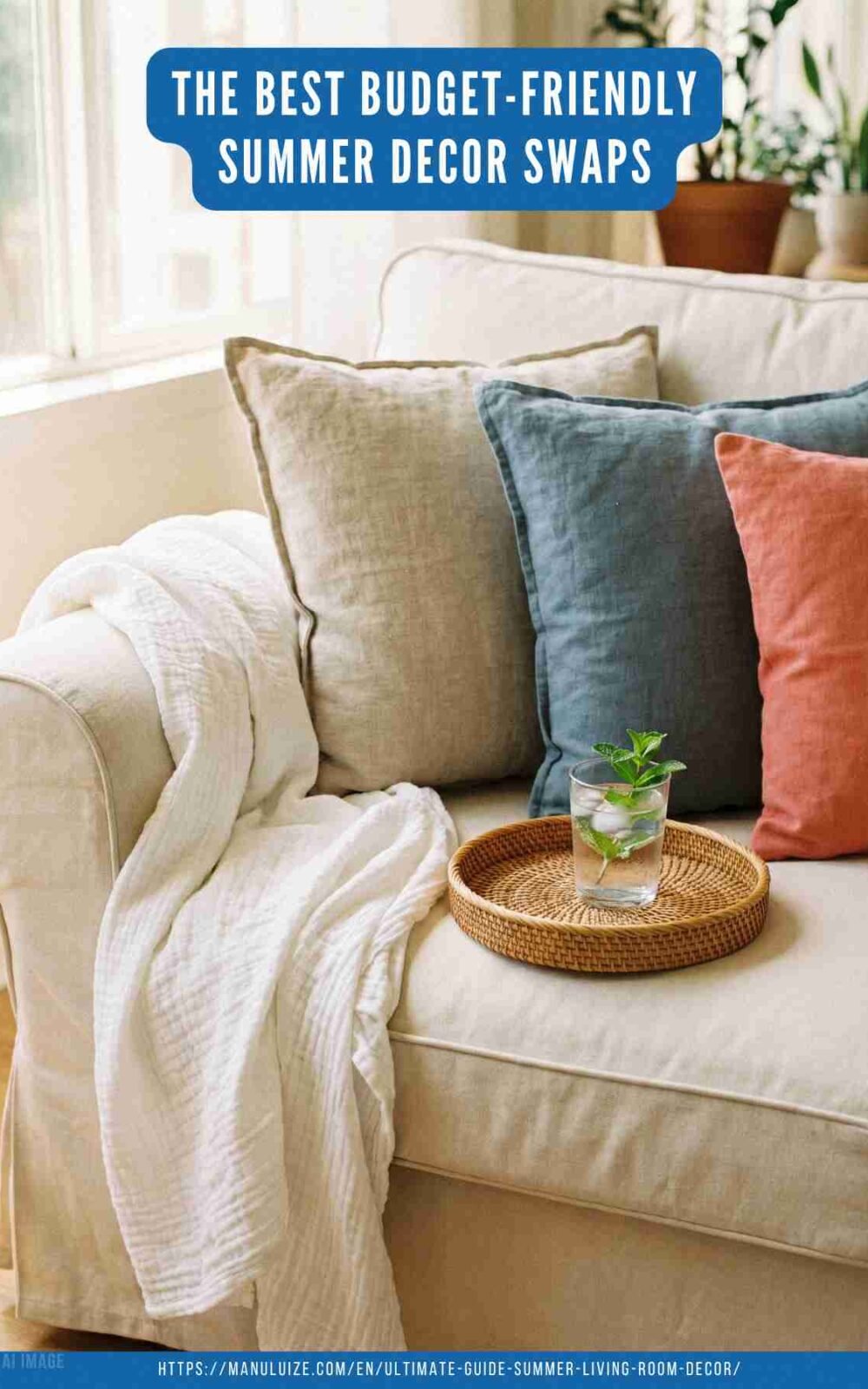
- Swap cushion covers — you keep the inserts, just buy new covers. Linen or cotton covers in summer tones cost very little and make a significant impact
- Add a single statement plant — a medium-sized pothos or snake plant from a garden centre usually costs under $15
- Replace one set of curtain panels — even budget-friendly sheer white panels from a high-street store will transform a room
- Get a natural fiber table runner or tray — a woven jute tray on the coffee table is a $10 decision that looks like a $100 one
- Buy fresh flowers weekly — a budget for seasonal flowers is one of the best investments you can make in your home’s energy
Medium Investment Swaps (Under $100)
- A natural fiber rug — entry-level jute rugs are very accessible now and make a dramatic difference
- New throw blanket — a lightweight linen or cotton throw in a summer tone replaces the chunky wool one
- A statement ceramic or glass vase — something sculptural for a corner shelf or coffee table
- A wicker or rattan tray or basket — functional and decorative
What Not to Spend Money On
FYI, you do not need to buy new furniture for a seasonal refresh. You don’t need new art, a new TV unit, or a new sofa. These are long-term investments, not seasonal ones. The magic of summer decor is in the accessories and textiles, and you can swap those back out in September without guilt.
Room-by-Room Summer Styling Tips
While this guide focuses on living rooms, a lot of these principles extend to the whole space. Here’s how to think about summer styling within the living room itself, broken down by zone.
The Sofa Zone
The sofa is the centrepiece of most living rooms, so it’s your biggest opportunity. For summer, aim for:
- Three cushions maximum on a two-seater, five on a three-seater. More than that reads as cluttered
- A mix of sizes and textures — one large, one medium, one small creates visual interest without chaos
- A lightweight throw draped casually over one arm, not folded perfectly. Casual and relaxed is the summer energy
The Coffee Table
Summer coffee table styling is about restraint. A single tray, one or two books, a plant or vase, and one small decorative object is the formula. Everything should feel intentional and considered.
Avoid:
- Piling up too many objects — it makes the table look busy and the room feel small
- Matching everything exactly — a bit of variety in texture and material looks more organic
- Ignoring practicality — you need to actually be able to put your coffee down
The Window Area
Windows are summer’s secret weapon. Maximizing natural light transforms a room more dramatically than almost any other change. Swap heavy drapes for sheer panels. If privacy allows, leave windows entirely uncovered during daylight. Move furniture away from windows that might be blocking light.
If you have a window seat or a chair near a window, make it a focal point. A good cushion, a small side table, and a plant nearby creates a reading nook that looks effortlessly styled.
Shelves and Surfaces
For summer, edit your shelves down. Remove about a third of what’s currently there and create breathing room between objects. Lean a few pieces of art rather than hanging everything. Group similar items together — a collection of white ceramics, a cluster of books, a grouping of plants. Negative space is a design element, not empty shelf syndrome.
Lighting
Heavy lampshades absorb light. If you can, swap any dark lampshades for white, cream, or natural ones for summer. Even translucent glass or rattan shades that allow light to filter through work beautifully. The goal is a room that feels bright and open rather than warm and dim.
Coastal vs Tropical vs Boho Summer Styles
Not everyone wants the same summer aesthetic, and that’s the beauty of it. Here’s a quick breakdown of the three most popular summer living room styles and how to achieve each one.
Coastal Summer Style
The vibe: Breezy, relaxed, classic. Think Hamptons meets Mediterranean. Blue and white with sandy neutrals.
Key elements:
- Blue and white colour palette with natural wood or rattan accents
- Striped textiles — cushions, rugs, throws in classic navy or soft coastal blue and white
- Natural textures like driftwood, seagrass, and linen
- Subtle nautical or beach-inspired accents — shells, rope, sea glass. Not overdone
- Clean lines and an uncluttered look
The golden rule of coastal: Less is more. The moment you add anchors and fish-shaped cushions you’ve crossed from coastal into themed, and themed is a slippery slope.
Tropical Summer Style
The vibe: Bold, lush, maximalist-lite. Botanical prints, deep greens, warm wood, and a sense of abundance.
Key elements:
- Statement tropical plants — bird of paradise, monstera, palms
- Botanical print textiles — cushions or a throw with leaf or floral prints
- Warm colour palette — deep greens, terracotta, mustard, and natural tan
- Rattan and bamboo furniture or accessories
- Layered textures — woven baskets, ceramic pots, linen alongside bolder fabrics
The difference between tropical and overwhelming: Keep the walls and large furniture neutral. Let the accessories and plants carry the tropical energy.
Boho Summer Style
The vibe: Eclectic, personal, textural, and warm. No rules, just vibes — but actually quite a lot of rules if you want it to look intentional.
Key elements:
- Layered rugs — a jute base with a smaller patterned rug on top
- Mixed textiles — macramé, woven cotton, embroidered cushions, tassels
- Warm, earthy tones — rust, ochre, warm brown, sage green
- Plants everywhere — the more the better in boho style
- Personal objects and collected pieces — vintage finds, handmade pottery, artisan items
The trap to avoid: Boho can quickly tip into “a lot of stuff happened here.” The edit is everything. Curate your collected pieces carefully so the room feels intentional, not chaotic.
Frequently Asked Questions
How do I make my living room feel cooler in summer without air conditioning?
Start with your colour palette. Cool blues, crisp whites, and soft greens visually reduce the perceived temperature of a room. Follow with fabric choices — linen and cotton breathe far better than velvet or polyester. Declutter surfaces and create more open space, as visual breathing room genuinely affects how cool a room feels. Finally, control direct sunlight with sheer curtains or bamboo blinds that filter rather than block light.
What are the best plants for a summer living room?
For statement impact, go with a bird of paradise, a monstera, or a fiddle leaf fig. For low maintenance, a snake plant, ZZ plant, or pothos are near-indestructible options. The most important thing is to choose a plant that suits your light conditions. A beautiful plant dying in a dark corner doesn’t help anyone.
Do I need to spend a lot to refresh my living room for summer?
Not at all. Some of the most effective summer decor changes are completely free — rearranging furniture, decluttering surfaces, and moving accessories from other rooms. For under $50, swapping cushion covers, adding a plant, and replacing curtain panels will transform the space dramatically. The key is working with what you have and editing down rather than adding more.
What colors work best for a summer living room?
The most versatile summer palette combines soft blues or aquas with crisp white or warm cream and then adds one or two pops of warm accent color — coral, terracotta, or gold. This combination feels fresh and bright without being cold. It also works in virtually any home regardless of the existing furniture and flooring.
How do I choose the right rug for summer?
Natural fiber rugs are the best choice for summer. Jute is softer and more comfortable underfoot, sisal is more durable for high-traffic areas, and seagrass sits somewhere in between. All three come in warm natural tones that pair beautifully with summer palettes. Avoid thick pile or heavily patterned rugs that add visual weight to the space.
What’s the biggest summer decor mistake people make?
Adding too much rather than editing down. Summer decor is about lightness, openness, and breathing room. The instinct to decorate is to add things, but the real skill is knowing what to take away. Clear the clutter first, then make your targeted swaps. You’ll be amazed at how different a space looks when it has room to breathe.
Summer living room decor really comes down to one core idea: light, breathable, and connected to the outdoors. Whether you go coastal, tropical, or boho, whether you spend $10 or $500, the principles stay the same. Edit first, swap your textiles, bring in natural materials, add some greenery, and let the light in.
You don’t need a design degree or a huge budget to make your living room feel like a place you genuinely want to spend time in during the warmer months. You just need to be intentional about it. Start with the sofa cushions. Then the rug. Then a plant. One step at a time, and before you know it you’ve got a space that feels like summer all the way through.
Now go do it. Your living room is waiting 🙂